MSc Architecture: Advanced Environmental and Energy Studies

A postgraduate degree from the University of East London, based at the Graduate School of the Environment at the Centre for Alternative Technology
Working with natural systems thinking and resources to develop a world where we respect our natural life support system and live within its limits.
The MSc Architecture: Advanced Environmental and Energy Studies (AEES) course provides a holistic approach to sustainable design, architecture and building. Taught at the Centre for Alternative Technology in mid Wales, the course is based in the award winning Wales Institute for Sustainable Education (WISE). Various teaching methods draw on the expert knowledge of our tutors, and on the Centre for Alternative Technology’s 35 years of experience in teaching sustainability.
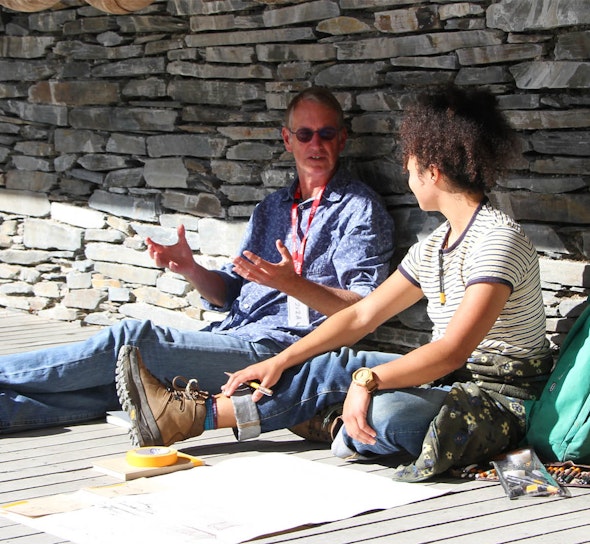
Collegiate, inspiring, collaborative, empowering, completely unique. The whole is truly more than the sum of the parts, with a large and diverse student body bringing unique benefits in sharing ideas, information and resources
The course is extremely flexible, students complete eight modules over the space of one year for full time students, and two years for part time; each module is taught over one week per month, allowing students to continue with careers or other projects whilst studying for their masters.
Aims and objectives
This course aims to explore the relationship between people, technology and the environment, whilst focusing on the environmental impact of buildings. From the large scale to the detail, students develop a deep understanding of intra-disciplinary approaches to the design, adaptation and management of our living environment .
The course offers a contextualised and deep understanding of sustainability in architecture. Study moves from the broad aspects of global resources, ecosystems, energy and climate change, through urban sustainability issues, to the specifics of energy and environmental assessment. Green building and community design, energy provision, occupant well being, behaviour and citizenship are all explored along the way.
Throughout the course students are encouraged to challenge existing orthodoxies and to explore potential, cultural and technical responses to a changing world, whilst respecting the limits posed by our ecosystem.
Programme content
Minimising waste and maximising our creativity to manage and restore the natural systems and resources that we rely on for life. AEES includes awareness of systems governing:
- Ecosystems and biodiversity.
- Climate change and resource depletion.
- Water cycles and management.
- Energy conservation and generation.
- Materials and resources.
- Land use and food.
- Transport.
- Trade, economics and livelihoods.
- Governance and culture.
From September to February, modules cover environment and energy fundamentals such as environment and politics, climate and building performance and basic principles of renewable energy systems.
The summer modules (March to July) look at building in an environmental context and at the issues of environmental design. These modules focus more on the practical aspect of design, giving students the opportunity to test their knowledge and gain experience.
The course content covers technical, social, political and economic impacts of environmental and energy issues, and is taught in four key ways:
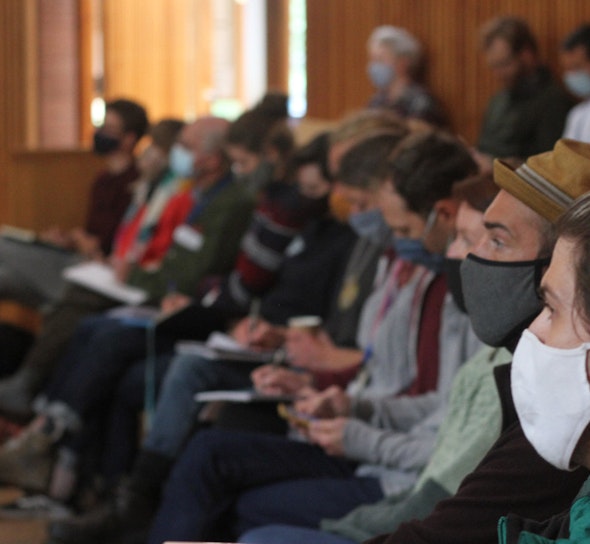
- Taught lectures. Listen to September's guest speaker Nick Baker's lecture here
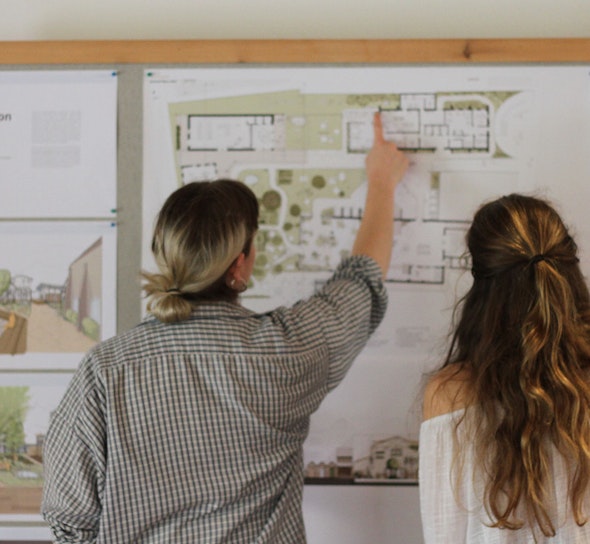
- Practical exercises.
- Individual research.
- Seminars.
The course is suitable for people who want to expand their knowledge of current and future sustainability issues and individuals who want to re-skill or work towards a career change.
See the module dates list for the 2012 and 2013 MSc Architecture module dates.
Methods of assessment
Modules are assessed through a variety of ways, which may include essays, reports, critique, presentations and group presentations. They are usually assessed by a mixture of written assessment (worth 80%) and a presentation (worth 20%), or solely by written assessment.
This is then followed by a 12,000 word thesis.
Entry requirements
Either an undergraduate degree or relevant life experience is required to study on this course. Please note that this is an academic course and you will be expected to complete all coursework to the required standard.
Fees and discounts
The next intake is September 2013.
The fees for the current academic year are:
- Resident in UK/EEA: £7000.(£5000 fees and £2000 food and accommodation) Payable in instalments or in full on enrolment .
- Resident outside EEA: £14,000. Half paid on acceptance, the remainder paid on enrolment.
- There may be an increase for the academic year 2013/14.
You may pay in instalments or in full.
Please refer to our fees policy for more information.
International students should note that we do not have a Tier 4 Sponsor licence, which allows us to accept International students who require student visas to study on our residential courses.
Please take a look at our MSc Architecture: Advanced Environmental and Energy Studies course which is available by distance learning.
This is a wide ranging and comprehensive course in sustainable architecture and renewable energy.
How to apply
The application form can be found online here.
On receipt of your application form, we will send an email confirmation.
If your application is successful, you will receive an information pack containing further details one month before the course start date. A deposit will be payable at this stage.
Contact Information
For more information please contact:
Tim Coleridge, Programme Leader:
This e-mail address is being protected from spambots. You need JavaScript enabled to view it
Student Support Officer:
This e-mail address is being protected from spambots. You need JavaScript enabled to view it
Tel: 01654 704989
Joan Randle, Head of Quality and Support:
This e-mail address is being protected from spambots. You need JavaScript enabled to view it
Tel: 01654 704968
Is this the course for you?
If you would like to visit for a free overnight stay during a module, attend lectures and workshops and meet staff and students, please contact the Student Support Officer - email:
This e-mail address is being protected from spambots. You need JavaScript enabled to view it
Recommend a friend
Share this course page with friends and contacts via email or your social network.
Apply now
Use this quick and easy online application form
Illustrated course brochure
All the essential information in one eight-page guide
Programme handbook
A detailed 80-page description of the course.
Programme specification
A summary of the course on the University of East London website